
September 18, 2026
The most important backup-power question is not “Which battery should I buy?” It is “What does the property need to keep doing when the grid is gone?”
A smart home can contain lighting control, security cameras, gates, networking, refrigeration, HVAC, pumps, AV, EV charging and dozens of other electrical loads. Backing up everything at full power can become unnecessarily expensive. Backing up the wrong things can leave the property technically energized but practically unusable.
This article focuses on critical-load planning. For estate-scale solar, battery and generator engineering, see our backup-power guide for Atherton and Woodside estates. For current battery platforms, see our Tesla Powerwall 3 and FranklinWH engineering comparison.
Critical loads are different from “important appliances.” On a connected residence, the network may be as operationally important as a refrigerator because cameras, intercoms, automation and remote access can depend on it.
A typical critical-load review may include:
Networking and communications. Router/firewall, core switches, fiber/ONT equipment, selected Wi-Fi access points and communication gateways.
Security and access. Surveillance recorders, cameras, intrusion equipment, access control, gates and intercoms.
Refrigeration and essential kitchen loads. Refrigerators, freezers and selected outlets.
Water and drainage. Well pumps, booster pumps, sump systems or other site-specific water equipment.
Selected HVAC. Instead of backing up every zone, the owner may choose bedrooms, an office or one primary living zone.
Specialty preservation loads. Wine storage, server equipment, aquariums or other systems where an outage can cause disproportionate loss.
Backup duration improves dramatically when discretionary loads are deferred. Pool heating, secondary HVAC zones, decorative exterior lighting, sauna/steam systems and high-rate EV charging may not need to operate during an outage.
That does not mean those loads must be permanently excluded. Smart load management can make them conditional. A pool pump might run only when solar production is strong. An EV charger can pause while the home is on battery, then resume when the grid returns. A second air-conditioning zone can shed if total backup demand becomes too high.
Stored energy is usually discussed in kilowatt-hours. Output power is discussed in kilowatts. A battery bank can have enough stored energy to last through the night and still be unable to start several large motors at once.
This is why backup design begins with the load profile. HVAC compressors, pumps, ovens and EV chargers can create high simultaneous demand. The project team needs to understand both how much energy those loads consume over time and how much power they require at the moment they start or operate.

Modern residential batteries can transition quickly when the utility fails and operate without engine noise. When paired with solar, they may also recharge during daylight if the system supports islanded solar operation.
Batteries are particularly attractive for overnight resilience, short outages and homes where generator noise or fuel storage is undesirable. Their limitation is finite stored energy. A multi-day outage with poor solar production can exhaust a battery bank if the loads are not managed.
A standby generator converts stored fuel into electricity and can continue operating as long as the fuel supply and maintenance condition allow. That can make it valuable on rural or estate properties where multi-day outages are part of the design brief.
Generators introduce different constraints: sound, exhaust, clearance, fuel, maintenance and transfer equipment. They should be sited with the architect and landscape architect rather than dropped into whichever exterior corner remains after construction.
These technologies do not have to compete. A battery can provide immediate, quiet backup. Smart load management can preserve stored energy. A generator can provide long-duration support after the battery reaches a planned threshold.
The exact operating sequence must be supported by the selected manufacturers and electrical architecture. We do not assume that any generator, battery and smart panel can simply be combined because each product works well on its own.
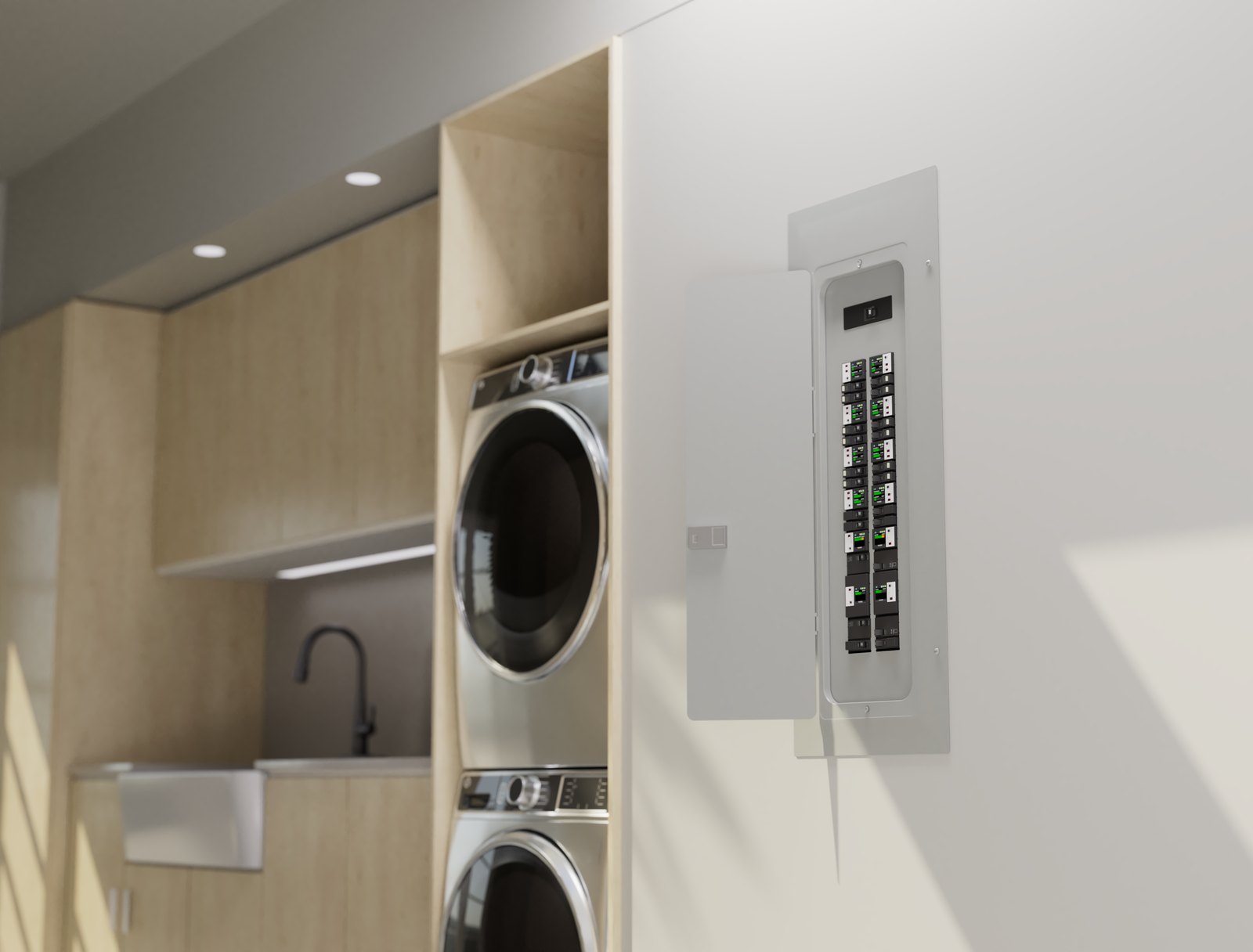
A larger battery or generator system can still take a moment to detect an outage and transfer the property. Sensitive network and control equipment may reboot during that transition if it has no local ride-through.
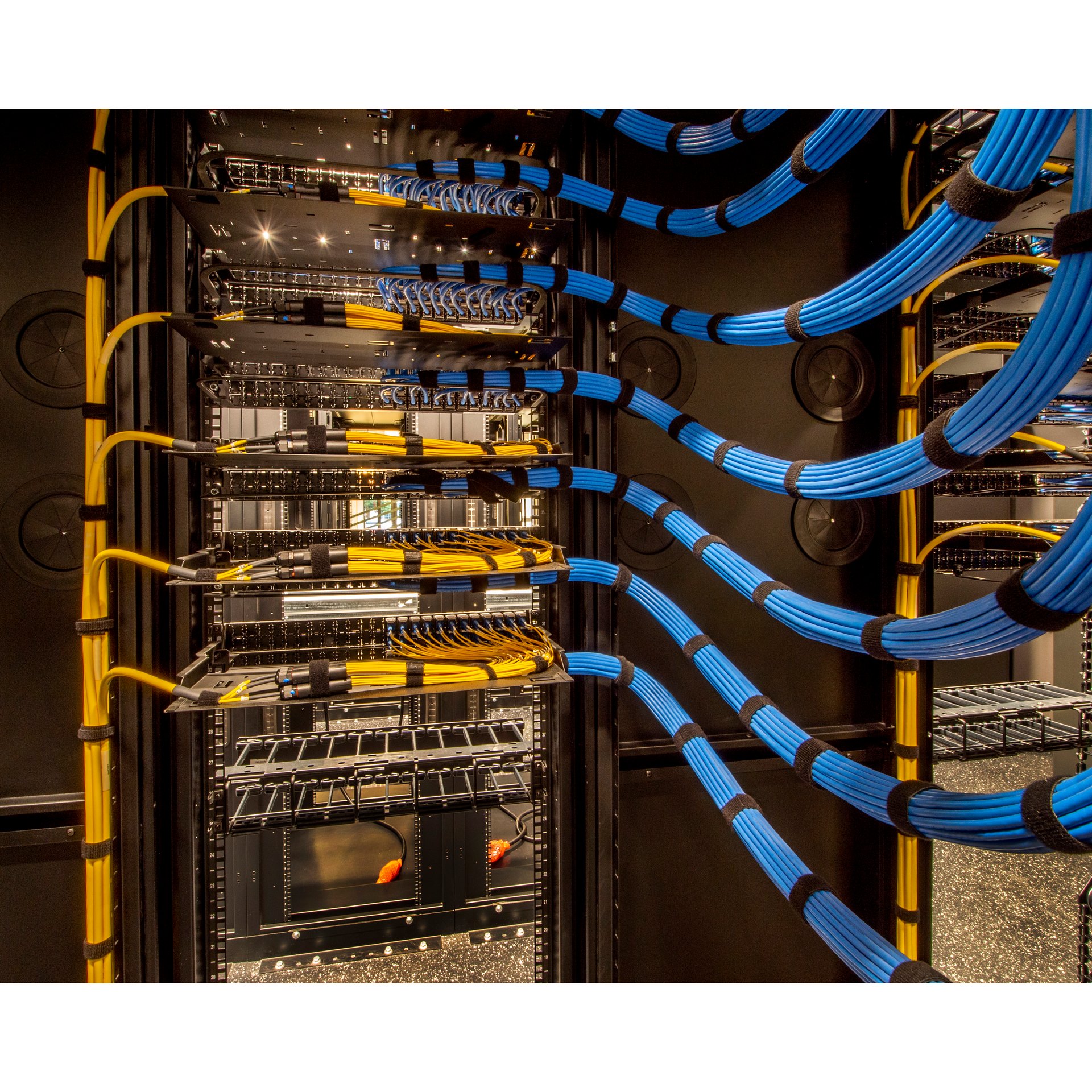
UPS-backed rack equipment creates a second layer of resilience. Routers, switches, automation processors and security hardware can remain online through short disturbances while the larger backup system changes operating state.
This layered approach also helps with power quality and controlled shutdowns. See our AV rack design and serviceability guide for the equipment-room side.
The answer depends on which processors, network equipment, gateways, power supplies and downstream loads are backed up. A Lutron processor may remain powered while the circuits it controls are not. A camera can have PoE backup while the network recorder is on an unprotected outlet. A Savant or Control4 processor can stay online while a television or amplifier is intentionally shed.
This is why “the smart home is on battery” is not a precise engineering statement. The backup plan should map the complete path from source to device.
During an outage, the design goal is usually safe circulation and useful living light—not every decorative lighting circuit at full output. Selected interior paths, stairs, kitchens, exterior entries and security-related lighting may be high priority. Large decorative loads can be deferred.
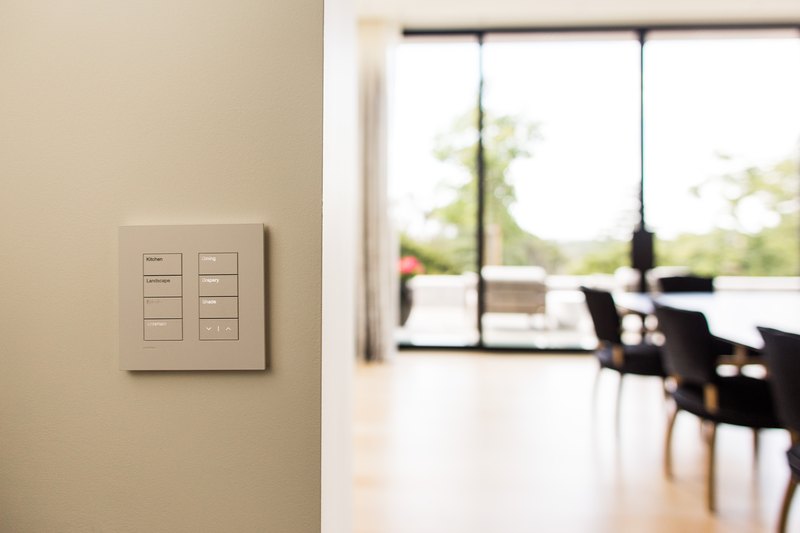
HomeWorks or another control platform can make this behavior easier to understand by presenting a dedicated backup or outage mode rather than asking the homeowner to remember which circuits are supported.
Heating and cooling loads can dominate both instantaneous power and total stored-energy use. A large home may have several compressors and air handlers. Backing them all up can materially increase battery and generator requirements.
Many owners choose one or two critical zones for outage operation. That keeps sleeping or primary living areas comfortable while avoiding the cost of designing backup around every mechanical zone.
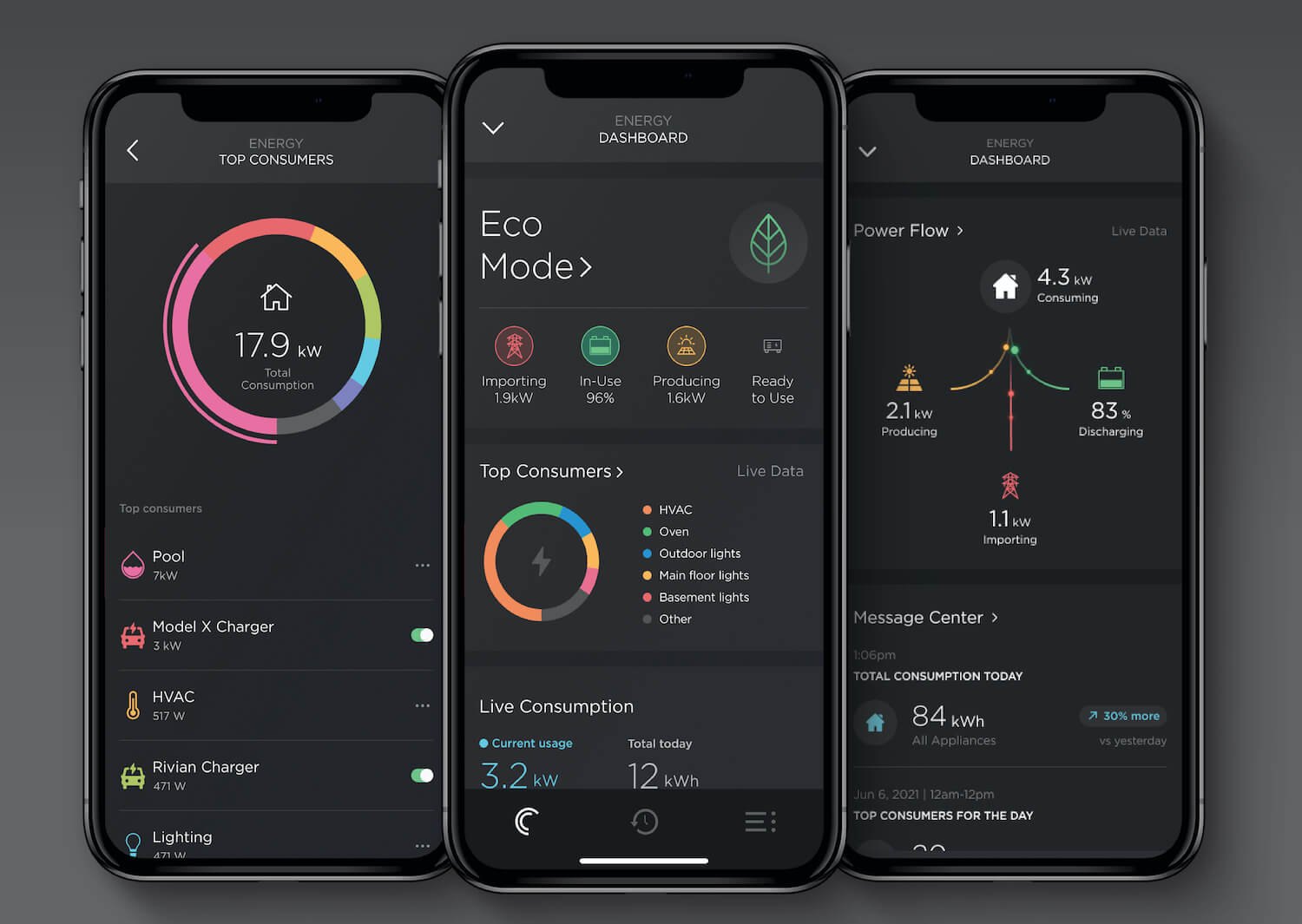
High-rate EV charging can consume energy rapidly. Some properties should disable it automatically during backup; others may reserve a limited charging rate because transportation is considered critical.
The important part is to decide intentionally. EV charging, battery storage and future service capacity should be coordinated with the broader EV charging and smart-panel plan.
On larger properties, the main house can be fully backed up while the entry gate or detached network cabinet loses power. That can make the site difficult to access or impossible to monitor remotely.
Regent5 maps those remote structures and utility feeds as part of estate resilience planning. The gate operator, access control, intercom, cameras, network link and any heater/fan or enclosure hardware may all have separate electrical paths.
Regent5 combines electrical engineering, energy management, automation, networking and security to design backup-power behavior for Bay Area homes and estates. The objective is not to sell the largest battery bank. It is to keep the property functional for the owner’s required outage duration while controlling cost, equipment footprint and complexity.
If you are planning batteries, a generator, solar or a service upgrade, contact Regent5 for a critical-load and backup-power review.


.svg)

© 2024 Regent5, LLC. CSLB C10 & C7 License 1033103.